Showing posts with label Deansgate. Show all posts

Saturday, 8 April 2017

Blue Boar, 96 Deansgate, Bolton


Another recent closure and a sad loss both to local drinkers and local historians. The former for obvious reasons, the latter because the Blue Boar was one of the oldest pubs in Bolton dating back to the 18th century. Until its closure in 2016 it was one of the few surviving pubs from the Bolton licensing list of 1779.

From 1843 until around 1869 the pub was owned by Thomas Dickenson. Mr Dickenson was hauled in front of the courts in April 1848. He was accused of breaking the regulations regarding the sale of alcohol on Good Friday. In those days – and until fairly recently – Good Fridays were treated as a Sunday. Selling booze before midday on that day was illegal. Mr Dickenson was caught and fined 20 shillings. That was £1 in old money and the equivalent of around £115 today. (Getting a drink on a Good Friday afternoon was hard work up to the Sunday licensing laws were liberalised in 1995). [1]

The pub was owned by its licensees for much of its early existence and they would also double as brewers at a small plant behind the pub. One of the last of those was Thomas Wright. He was the licensee in 1895 though prior to that, in 1891, he was at the Church Inn on Bamber Street. He was back in the Daubhill area on the next census in 1901 when he is described as a journeyman brewer living in Birkdale Street.

The pub was subsequently owned by three local breweries: Magee, Marshall’s; Tong’s and finally the  Bromley Cross firm of Hamer’s based at the Volunteer Inn. It fell into the hands of Dutton’s of Blackburn who took over Hamer’s in 1951 and then Whitbread’s when they bought out Dutton’s in 1964.

The Blue Boar was popular with Bolton's Irish community in the fifties and sixties. By the early eighties it was a two-roomed pub with a vault to the right of the entrance and a lounge in front, but a controversial refurbishment in the autumn of 1982 saw vault and lounge knocked into one large room, though the bar remained in the same place. There was sawdust instead of carpets on the floor and beams made from rough timber appeared along with farm implements and chains on the walls. [2]

Local drinkers noted the refurbishment with some horror although they were partly mollified by the reintroduction on real ale for the first time in a number of years. Castle Eden was initially on offer followed in 1983 by the cask version of Whitbread Trophy Bitter. [3]

By the summer of 1985 the sawdust had been replaced by carpets. [4]

In 1994, the Blue Boar became one of Whitbread’s Hogshead pubs meaning it sold a number of real ales. But Whitbread decided to get out of pubs and brewing and the Blue Boar was one of a parcel sold by the company to Enterprise Inns. Enterprise themselves later sold the pub and it was owned by a succession of individuals until its closure in July 2016. It was a live music venue around 2008/2009.

Oddly, the pub was owned by Bolton Council at the time of writing – April 2017. The council also owns the former Sweetens bookshop building. It is believed that the whole block will eventually be demolished to provide access to the car park to the rear although some rumours suggest it will become student accomodation.
.
We’d love to think that the pub will one day re-open and we consign this entry to history, instead. That’s unlikely. Cultural vandalism might be one way to reduce the proportion of empty shops in the town, but what a sad and ignominious way to end almost 250 years of history.

[1] Manchester Courier, 29 April 1848
[2] What’s Doing, the Greater Manchester beer drinkers’ magazine. January 1983
[3] What’s Doing, October 1983
[4] What’s Doing, August 1985

Saturday, 3 December 2016

Old Hen and Chickens, 90 Deansgate, Bolton


Not that Hen and Chickens! This was the original pub of that name. As we have written previously, it wasn’t uncommon for there to be two pubs of the same name, often within yards of each other. There were two Millstones, two Three Crowns, two Nags Heads and there were two Hen and Chickens, both on Deansgate.

It was quite common for the older of two pubs with the same name to add the prefix ‘Old’, ‘Olde’ or ‘Ye Olde’ and that’s what happened in this case. The Hen and Chickens that survives to this day is officially known as the Higher Hen and Chickens.

The Old Hen and Chickens was situated further down Deansgate at number 90 and appears on the licensing register of 1778.  Seth Hitcroft was the licensee.

By 1821, it had been joined by its neighbour further up Deansgate. However, both clubs were named the Hen and Chickens on local records. It was only in the 1830s that the more ancient of the two hostelries became known as the Old Hen and Chickens.

Around 1850 James Fletcher became the landlord of the Old Hen and Chickens. He was to remain at the club until he died in 1868.  James Fletcher’s wife Lydia took over the running of the pub on his death but by 1876 it was in the hands of Ralph Entwistle.

Ralph Entwistle died in 1885 and the Old Hen and Chickens closed in 1888. Its full license was transferred to the Railway Shipping Inn on Crook Street. That pub was owned at the time by local brewers Atkinson’s which suggests that the Old Hen and Chickens was bought by them soon after Ralph Entwistle died. 

The Old Hen and Chickens had a full licence which made it attractive to Atkinson’s. It was also on the same row as two other pubs: the Kings Arms was next-door-but-one in one direction. The Blue Boar was three doors along in another. The Railway Shipping Inn’s proximity to Great Moor Street railway station also made it a prime candidate for a full licence rather than permission to sell only beer.

The Old Hen and Chickens premises were sold to a firm of dyers and cleaners named George Wright Ltd. By 1924 the building was occupied by a seedsman named William Southern.


The old pub building still stands. For some years it has been a furniture store as the image from 2015 shows (Google Street View).

Old Hen and Chickens 90  Deansgate Bolton


Friday, 4 December 2015

Masons Arms, 23 King Street, Bolton


The area between Deansgate and the River Croal in the centre of Bolton was once a thriving community. The early settlers to the town were attracted by the river as a source of water and as the town developed streets were built leading down to the Croal: Central Street, Velvet Walks, Queen Street, King Street and Grime Street, to name but a few. But this was often the poorest part of Bolton – certainly as the nineteenth century went on.

King Street contained three pubs in 1853 one of which would have been the Masons Arms. It doesn’t appear on the list of named Great Bolton beerhouses nor on the 1848 Directory, the first in Bolton to name beerhouses rather than just their licensees.

By 1861, James Phoeber was the landlord. He was a carder in Joiners Square in 1851 but he moved into the pub trade and was to spend over 15 years at the Masons.

In 1869 the Masons had to re-apply for its licence for the first time. From 1830 onwards a beerhouse opened simply by paying 2 guineas to the council and there were no annual renewals unless the licensed premises sold wines and spirits as well as beer. But from 1869 beerhouses were subject to annual licencing applications and with a growing temperance movement with members in high places there was pressure on beerhouses to be closed down.

Fortunately for James Phoeber he was able call on a local cotton spinner, Robert Walker, who owned the nearby St Helena Mill. Phoeber had formerly worked for Walker who testified to his good character having known both Phoeber and his wife Ann for over 40 years. Walker said that while he did not approve of beerhouses he knew that Phoeber would not allow his employees to drink in the pub. It sounds unlikely, but it got the Masons Arms through the licensing application. [1]

A few weeks later, James Phoeber put an advertisement in the Bolton Evening News asking for the owner of some lost property to return to the pub to reclaim it. Pub landlords have found a whole manner of items at the end of a boozy night - coats, handbags, wallets and umbrellas – but James Phoeber was faced with a completely different problem.

“Found. A donkey. Owner may have it on paying expenses. Apply, Masons Arms, King Street.”

Bolton Evening News, 1 November 1869

It seems one of his drinkers had left the poor animal behind after a night out and James Phoeber had to feed it while its owner was found.

 The Phoebers went back to spinning during the 1870s. By 1881 they were living in lodgings on White Lion Brow in between Deansgate and Chorley Street and James was working once again as a carder, presumably back at Walker’s.

In 1904 Thomas Rice was the licensee, but he faced a situation where the pub was under threat because of the actions of a previous landlord. The licensing magistrates proposed to close the Masons on account of the pub being “badly conducted and the resort of bad characters”. But Rice argued that a conviction against the pub in November 1903 was down to a previous licensee who had only run the pub on a temporary basis and who had allowed these bad characters to go into the house too freely. Remarkably, despite being in one of Bolton’s roughest neighbourhoods, there had been no convictions against the pub since 1867 – James Phoeber’s time. Before and since that recent conviction the pub had been excellently run. [2]

Thomas Rice was fortunate on that occasion, but the Masons only lasted for a little more than two more years. In late-1906 it was closed down and referred to the Licensing Compensation Authority, a council scheme set up to buy and delicence pubs it regarded as surplus to requirements. The Masons had been owned by the Cornbook Brewery Company of Manchester since 1899 having been in the hands of Boardman United Breweries following their takeover of the Bolton brewing company Atkinson’s in 1895. The Authority awarded Cornbrooks £400 for the Mason’s and the brewery took the cash. [3]

The premises became a boarding house for a number of years after its closure as a pub. It was demolished in the 1940s and the land has never been built on. It is currently used as Blundell Street car park.

[1] Bolton Evening News, 16 September 1869. St Helena Mill was the oldest in Bolton, built c1780. It still stands after a recent refurbishment. More on St Helena mill here
[2] Manchester Courier, 14 April 1904

[3] Manchester Courier, 11 January 1907.


Site of Masons Arms King Street Bolton 2015


Blundell Street car park pictured in August 2015 (copyright Google Street View). King Street can just be seen at the bottom of the picture, Blundell Street can be seen at the right hand side heading down to St Edmunds Street (formerly Grime Street). St Edmunds church and the flats on Marsden Road can be seen in the distance.

Sunday, 22 November 2015

Beehive - Cloggers Arms, 118 Deansgate, Bolton


Bolton Central Post Office pictured in August 2015 (copyright Google Street View). The building occupies a row of properties that at one time contained the Beehive.

The Beehive was situated at 118 Deansgate originally known as the Cloggers Arms. It became a pub around 1849 when Robert Kellett was listed at the licensee. Robert was born in 1821 and lived on Horrock Row in Turton in 1841 along with his parents Betsy and Thomas. He worked as a clogger but shortly afterwards he moved to the centre of Bolton to open a business on Deansgate.

How the pub came about is a matter for some conjecture. Robert is listed as licensee in 1849 but Henry Kay is also listed as being at the Cloggers Arms. Henry was a 30-year-old grocer in Deansgate on the 1841 census and it is quite likely that Robert rented space in Henry’s shop to work as a clogger before the two men eventually opened a beer house on the premises. Robert Kellett was certainly there by the time the 1843 Bolton directory was compiled.

Robert Kellett was at the pub until at least 1861 but it is listed on that year’s census as the Beehive – quite apt given the number of trades that took place on the premises.

In Bolton Pubs 1800-2000, Gordon Readyhough tells us that by 1870 the Beehive was jointly owned by the landlords of two nearby pubs, the Kings Arms and the Welcome Traveller. The latter’s landlord was Thomas Kellett, who may well have been a relative of Robert Kellett.

Certainly by 1876 the Beehive was run by Charles J Lyons, but Mr Lyons had his finger in another pie. The 1881 census tells us that his occupations were ‘beerseller and excursion agent’ and it was the latter business that Mr Lyons decided to concentrate his efforts on. He got out of the pub business and by 1891 he was living in Coop Street, Tong-with-Haulgh and working as an excursion promoter, an early travel agent.

The Beehive’s licence was allowed to lapse around 1900 by which time it was being supplied by the Manchester brewery of JG Swales.

The building stood for at least another ten years until it was demolished to make way for Bolton’s central Post Office. Work on the new building commenced in 1913 and was completed in November 1916. Although the central post office spent some time in Paderborn House in the seventies and eighties it now operates again at Deansgate on the site of the former Beehive.

Sunday, 9 August 2015

Fox and Goose, 160 Deansgate


The Fox and Goose stood at the top end of Deansgate, close to Marsden Road.

It was a beerhouse first mentioned in a marriage listing of 1847 when John Blackley (or Bleakley), a beerseller of Deansgate, married Elizabeth Crowther. Blackley was a widower, but eyebrows must have been raised at the union. The 1851 census return tells us that John Blackley was 62 years old; Elizabeth was only 29 – just four years older than one of John’s sons and 33 years younger than her husband.

By 1861 the Fox and Goose was in the hands of Henry Heyes. The pub brewed its own beer and by the 1870s, Henry was also the owner of the Egerton Arms on Lever Street. 

Henry Heyes was to run the Fox and Goose for over 20 years. His wife Martha died in 1877, aged just 44, and Henry himself died four years later in 1881. That year’s census showed five children living with him just months before he died, though some of them were of adult age.

The Fox and Goose was sold and it was being run by Luke Flaharty by 1891, but the pub’s licence was refused in 1897. Whether or not there were any misdemeanours or specific objections to the licence isn’t known. What is known is that the council were expanding the fire station on Marsden Road and wanted the small row of buildings that lay between Marsden Road and Grime Street (now St Edmunds Street). That included the Fox and Goose.


The pub was demolished before the end of the nineteenth century and the fire station extended into the former pub premises.

The pub was demolished before the end of the nineteenth century and the fire station covered the former pub premises. The old fire station came be seen here in 2000 just before it was demolished.

Below is an image of the area from 2012 (copyright Google Street View).


Thursday, 29 January 2015

Silver Vat - Lion's Paw - Four Horseshoes - Horse Shoe, 75 Deansgate

Lions Paw Deansgate Bolton


The Horse Shoe on Deansgate was one of Bolton’s oldest pubs. It was listed as one of Great Bolton’s Ale Houses in 1778 and by that time it had already been in business for some time [1] at the corner of Old Hall Street South and Deansgate. The landlord at that time was Henry Wilkinson and the Wilkinson family were in control of the pub under two of its various guises for much of its existence.

The Horse Shoe changed its name towards the end of the 18th century.  The  pub was the headquarters at various times of the freemasons’ St John’s Lodge. The lodge led something of a nomadic existence changing its headquarters on no fewer than 17 occasions in the century following its establishment in 1797. On four of those occasions it moved to the Four Horseshoes and we know that the pub had adopted its new name by the time of the lodge’s initial move there in 1802.

The Wilkinsons sold the Four Horse Shoes in the 1870s thus ending an association going back around a hundred years. By 1899, the pub was one of a number of tied houses belonging to a local brewery, Wingfield’s Silverwell Brewery Ltd of Nelson Square. Wingfield’s sold out to the rapidly-expanding Manchester Brewery Company Ltd of 1899. [More on Wingfield's here].

The Four Horse Shoes became the Lion’s Paw in the early years of the twentieth-century, but MBC decided in 1907 to knock down the original 18th-century pub and rebuild it as a much grander affair. The new building was done almost in a mock-Tudor style and there was yet another change of name, this time to the Silver Vat. At that time, the Manchester Brewery Company was heavily marketing its “Silver Vatted Ales” although it has been claimed they inherited the trademark when they took over Wingfield’s.

Lions Paw Deansgate Bolton


But MBC were in trouble. A few years before the Lion’s Paw was rebuilt a shareholders’ committee discovered that a number of the firm’s pubs had been neglected for many years and that a number of takeovers in the name of expansion had left the company strapped for cash. In 1912, the Salford brewer, Walker & Homfray’s, bought the Manchester Brewery Company and although MBC remained in existence until 1956 its brewery closed in 1924.

In 1929, just 22 years after it was built, the Silver Vat was sold to its next-door neighbour, the District Bank. While it seems odd that a building should be demolished after such a short period of time it is likely that District Bank offered Walker & Homfray’s a good enough price to warrant its sale. The Silver Vat was demolished and District Bank expanded into the former pub.

District Bank formed part of the newly-formed National Westminster in 1970. After a spell as a KFC franchise during the first decade of the 21st century the building is now a branch of the Nationwide Building Society.


[1] Bolton Pubs 1800-2000, by Gordon Readyhough (2000)  

Saturday, 4 October 2014

Lower Nags Head - Oliver's, Deansgate


Lower Nags Head Deansgate Bolton

Lower Nags Head Deansgate Bolton


Two versions of the Lower Nags Head  pictured in 1927. At the top is the original eighteenth-century building. Below the grander, version, rebuilt in that year. That building still stands and is currently used as a bank .

Images from the Bolton Library And Museums Service collection. Copyright Bolton Council.


The Lower Nags Head stood Deansgate, close to the junction with Bridge Street and Mealhouse Lane and a few doors along from where Marks and Spencer’s now stands.

The area around the pub once belonged to the Brownlow family who built Hall-I’th-Wood in the sixteenth century. Gardens and orchards extended over what is now Market Street and Victoria Square.

The original Lower Nags Head building dated back to the eighteenth-century. It was originally known simply as the Nag’s Head and appears on the Great Bolton licensing records of 1778. It pre-dated as a pub its similarly-named neighbour the Higher Nags Head by over 40 years.

By the 1840s the pub was being styled ‘the Old Nags Head’ to differentiate it from its upstart neighbour which only became a pub in around 1820. The landlord at that time was James Isherwood and he had a sideline as a coach proprietor. His Prince William stagecoach would head off to Manchester from outside the pub once every day.

The local brewery of Magee, Marshall and Co eventually took over the pub. By the twenties they also owned the Higher Nags Head and decided to close down both pubs and rebuild the Lower Nags Head (as it  had been styled since the 1860s).

The Higher Nags Head was demolished in 1929 and converted into shops which can still be seen in between Market Street and Oxford Street. The Lower Nags Head survived – in name only and not without radical change. The tiny, eighteenth-century building was deemed not fit for purpose and Magee’s rebuilt the Lower Nags  a couple of doors down in 1927.

The photo at the top of the page shows the two buildings side-by-side. The difference is remarkable; the old building looks like a shack compared to the newer Lower Nags Head with its impressive Doric columns and its ornate rooftop.

But while the old building had served as a pub for 150 years the new pub, for all its fancy architecture, lasted considerably less as licensed premises. Magee’s had sold out to Greenall Whitley in fifties and Greenall's obviously considered the Lower Nags to have more potential as a retail outlet than as a pub.

When Magee’s rebuilt the Lower Nag's they put in a huge cellar along with a downstairs lounge. In 1966 Greenall’s closed the two ground floor bars and extended the downstairs lounge into part of the cellar. The Doric columns were torn down and the street-level entrance was divided into two with stairs leading down to a Nags Head that really was ‘lower’, but with Hepworth’s tailors taking up the rest of the entrance and the whole of the ground floor.

But the Lower Nags Head received a new lease of life. A resident DJ was put in and the pub is fondly remembered on various internet forums. The 70s Bolton group on Facebook has numerous reminiscences from customers, licensees, doormen and DJs at the Lower Nags and it is clear that a great deal affection remains for the pub amongst its former customers.

However, it wasn’t to last. There was a refurbishment in 1982 and a name change to Oliver’s in 1985 but Greenall’s pulled the plug in 1989 and the pub closed.

The Abbey National building society converted the whole of the ground floor into one of their branches. It is now a branch of the Santander following their takeover of the Abbey National.

The Magee Marshall insignia can still be seen on the roof of the former pub premises.

Lower Nags Head Deansgate Bolton


The Lower Nags Head in 1980. Image from the Bolton Library And Museums Service collection. Copyright Bolton Council.

Higher Nags Head - Holden's Vaults, Deansgate

Higher Nags Head Deansgate Bolton


The Higher Nags Head pictured a few years before it closed in 1929.  Image from the Bolton Library And Museums Service collection. Copyright Bolton Council.

The Higher Nags Head was situated on Deansgate in between Market Street and Oxford Street.

The building was a private residence for some years before becoming a pub. It was built in 1735 as a townhouse for John Andrews (1684-1743). Andrews’ principle residence was Rivington  Hall, which he bought from the Breres family in 1729 but he needed a residence in the centre of town.

Andrews was famous for having built the beacon on top of Rivington Pike in 1733.

Around 1820 the house became licensed premises. It wasn’t uncommon for there to be two pubs of the same name not too far away from each other. For example, Whellan and Co’s Directory of 1853 shows the Millstone on Crown Street and the Old Millstone on Deansgate; a Three Crowns and an Old Three Crowns, both on Deansgate, and about 20 yards away from each other a Higher Nags Head and the Lower Nags Head, both of which were named the Nags Head  in 1853.

For a number of years people differentiated between the two pubs by referring to the Higher Nags Head as Holden’s Vaults. That was after John B Holden and Co, a firm of wine and spirit merchants who owned the pub and used it to store their stock.

John Brown Holden was born in Bolton in 1797 to the family that owned the George and Dragon in Oxford Street, just around the corner from the Higher Nags Head. The Great Bolton licensing records of 1778 show that Holden’s grandfather, John Brown, was in charge of the George and Dragon at that time. His mother, Mary, was later a licensee of the pub, certainly around 1818 and John was in charge by 1824. He added the Higher Nags Head around 1840 and used it as a base for his wine and spirits business.

Like a number of people in the drinks trade Holden entered politics. He was also a councillor for six years from 1851 to 1857 representing Exchange Ward for the Liberal Party. He was also a subscriber to the Bank Of Bolton.

John Brown Holden died in 1866, aged 69, the George and Dragon having been relinquished but with the Higher Nags Head still in the possession of John B. Holden and Co. Indeed, Holden’s were still charge into the early part of the 20th century.

The Higher Nags Head was eventually taken over by Magee, Marshall and Co of Daubhill. By then they also owned the Lower Nags Head. Having two pubs with similar names just a matter of feet from each other obviously made no sense to Magee’s. Two decisions were made in the late-1920s. First of all, in 1927 the Lower Nags Head was completely rebuilt and the old building demolished. Then, in 1929, the Higher Nags Head was sold.

The building was subsequently demolished and shops built on the site between Market Street and Oxford Street.


Saturday, 27 September 2014

Joiners Arms, Deansgate

Joiners Arms Deansgate Bolton
Joiners Arms pictured in 1900


The Joiners Arms was situated on Deansgate, opposite the Old Three Crowns.

The pub was one of Bolton’s oldest and appears on a 1778 list of Great Bolton licensed premises when Robert Yates was the licensee. [1]

By 1839 the Joiners Arms was in the hands of a wine and spirit merchant, Henry Bathe, and was nicknamed ‘Bathe’s Vaults’ – so called because of the area at the back of the pub where Bathe kept his stock. 

Bathe was there  until the 1860s and later retired to Wiltshire where he died in 1894.

The pub was later known as ‘T’Big Tub’.

The image above purports to show the Joiners Arms around 1870. It shows the landlord as being ‘R.Wright’. Richard Wright was the landlord in 1871, according to the local directory of the time. The modern-day image below shows architecture dating from the 1870s when the pub was rebuilt.

The Salford brewery Threlfalls took over the Joiners in 1891. Early in the twentieth century they sold off part of the front of the building to be converted into retail outlets. That left just the front entrace along with the rear of the building to continue to be used as a pub.

Joiners Arms Deansgate Bolton


In 1937 the photographer Humphrey Spender took a number of photographs of the interior of the Joiners for the Mass Observation project. This is one of them. It’s from the Bolton Worktown website and is copyright Bolton Council. There are other examples of the inside of the pub here, here, and here


Threlfalls closed the pub and sold off the building in 1958. It continues to be used for a number of retail outlets.

The image below is of the building in April 2012 (copyright Google Street View). The entrance to the Joiners was at number 15, where Vision Express now is. 

The alleyway to the right of the building has been in existence since at least middle of the 19th century and possibly earlier. At one time the thoroughfare led to a small street known as The Shambles, one of a number of small courts and alleyways in existence at that time in the centre of Bolton.


[1] Pubs Of Bolton Town Centre 1900-1986, by Gordon Readyhough. Published by Neil Richardson (1986).


Wednesday, 17 September 2014

Bay Horse (Scotch Vaults), 37 Deansgate

Bay Horse Deansgate Bolton

The Bay Horse, Deansgate, pictured in 1937. The photograph was taken by Humphrey Spender for the Mass Observation project and is one of a number of images from that period at the Bolton Worktown website.

The history of the public house holds many examples of licensed premises that kept the name of a significant figure in its history as a name or a nickname. The Old Original British Queen on Blackburn Road was a known as ‘Pomps’ after the family that owned the pub in the nineteenth century. The Joiners Arms on Deansgate was always known as Bathe’s Vaults even after Henry Bathe left, and a hundreds yards or so up Deansgate, the Bay Horse was always known as ‘The Scotch Vaults’. [1]


The Scot in question was George Munro. Born in 1832 Sutherland, Munro arrived in Manchester at the age of 19 when his uncle, James Hall, who made a fortune in the sugar plantations of Jamaica, got him a job with the Manchester branch of the wine and spirit merchant business of Findlater and Mackie.

By 1860, Munro was confident enough to go into business on his own account. He founded the drinks wholesaling business of George Munro & Co on Deansgate and branches were added in Blackburn, Wigan and Hanley near Stoke-on-Trent. The latter was founded in partnership with John Munro, who is believed to have been George’s brother.

George Munro &  Co bought the Bay Horse in 1865. This was one of Bolton’s oldest pubs. It appears on the Great Bolton Alehouses in 1778 and was in existence for some time prior to that.

According to the 1778 list the landlord was one Thomas Middleton.The Sankey family were in control for a number of years at the start of the 19th century. Enoch Sankey was licensee until his death at the age of 45 in 1823. His wife Mary succeeded him until she died in 1830.  John Eglin was in charge, according to the 1836 Bolton Directory. Eglin also ran the Flag on Great Moor Street.  The 1843 directory lists William Green as licensee and in 1853 it was Henry Dobson.

Given that the tied house system of pub ownership was some years away it was obvious that licensees, much like today, were leasing the pub and leaving after just a few years. Munro’s effectively tied the Bay Horse to their wholesale drinks business giving them an outlet for the brands they dealt in. As it was a public house with a full licence they could wines and spirits as well as beer.

By 1871 Munro’s Bolton branch, based at the Bay Horse, employed 10 men, two boys and one woman.

A fire in June 1879 at the back of the Bay Horse, where Munro kept his goods, caused damage estimated at hundreds of pounds. Otherwise, business was good. By 1881 the Munro family were living at Greenbank on Chorley New Road, Heaton.


Munro also bottled their own brand of beers. A Nut Brown Ale proudly proclaimed that Munro’s had been established “in 1747” – a little disingenuous given that Munro was the first of his family to have been involved in the drinks trade.

Like a number of prominent publicans Munro got involved in politics and represented the Exchange ward for the Liberal Party on Bolton Council from 1886 to 1889. A keen Presbyterian he was a member and generous supporter of St Andrew’s Presbyterian church on Bowker’s Row. [3]

Munro married a Scottish lady, Isabella Waugh of Lochmaben, Dumfries-shire and they had three sons and four daughters. He died in Bolton on 30 April 1894. Isabella died in Staffordshire in 1919 at the age of 81.

The Bay Horse continued until 1960. But right up to the end of its life the premises always gave the impression that it was a bonded warehouse rather than a pub as the 1937 photograph from the Humphrey Spender collection shows.

In the end the pub was sold to Marks and Spencer in 1959 and after around 200 years of history last orders were called for the final time in April 1960.

The site of the Bay Horse would form part of M&S’s new Bolton store which was fully open by the summer of 1968.

Incidentally, another of Munro's pubs, the Freemason's on Market Street in Farnworth, is still known by the nickname 'Munro's'.


[1] Bolton Pubs 1800-2000, by Gordon Readyhough. Published by Neil Richardson (2000).
[3] The church can be still be seen and was remodelled in the seventies as a small shopping arcade known as St Andrew’s Court.

Thursday, 24 July 2014

Kings Head Hotel, Deansgate


Blackhorse Street with the Hen and Chickens to the left of it in this April 2012 image (Copyright Google Street View). The King’s Head directly adjoined the Hen and Chickens although it was the ‘junior’ of the two pubs.  

Many readers will know the King’s Head on Junction Road – one of Bolton’s oldest pubs – but there was another pub by that name in the town centre until the late sixties.

The King’s Head Hotel dated back to the late-eighteenth century, according to Gordon Readyhough [1]. We can narrow that down to the final 20 years of that century as it doesn’t appear on the list of Bolton pubs from 1779.

Although the Kings Head ended its days as a Tetley Walker House it was a Magee’s pub at one stage and we can only guess that it was sold by the brewery as it was right next door to another Magee’s pub, the Hen and Chickens.

The King’s Head came undone by the needs of public transport. When Bolton  Corporation decided to close Howell Croft bus station and directed the vast majority of bus traffic into Moor Lane they realised that the Blackhorse Street junction with Deansgate was far too small to cope. A projected increased in the size and nature of traffic from the north of the town meant the junction needed to be widened.

Sadly, the King’s Head had to go and it, along with a small shop next door, closed in 1968 and were demolished that year.

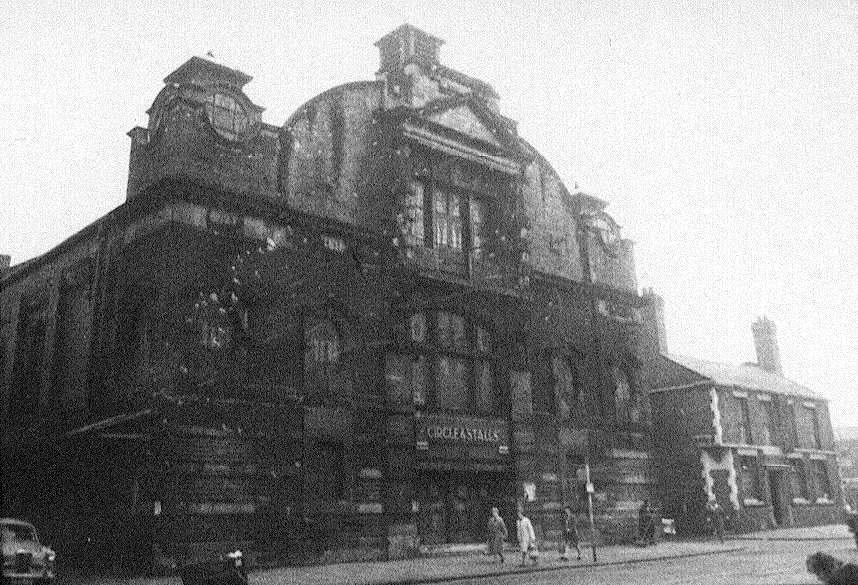
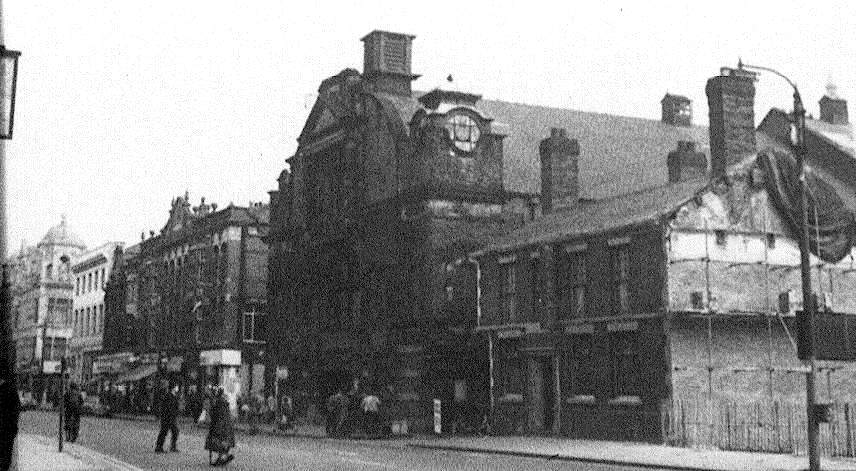
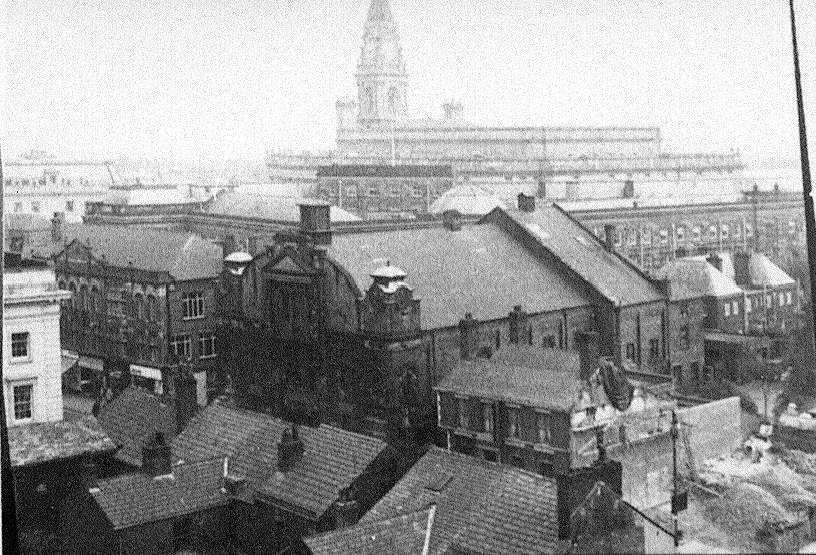
Next door but one to the King’s Head stood the Hippodrome Theatre and the King’s Head, the Hen and Chickens, and other nearby pubs such as the Greyhound, the Gypsy’s Tent, the Blue Boar and the White Lion would have served many thirsty patrons both during and after performances.

Photos of the Hippodrome can be seen here , here, and here. The photos are dated 1950, but given that the demolition of the King’s Head is in progress in at least two of the photos the images are more likely to be from 1968 or 1969.


[1] Pubs Of Bolton, 1800-2000, by Gordon Readyhough (2000). 

Tuesday, 20 May 2014

Gypsy's Tent/Gipsy's Tent/Winston's, 178 Deansgate


The site of the Gypsy's Tent in April 2012 (copyright Google Street View). The pub has been closed for some years and work began in 2017 on converting the building into flats. 


The Gypsy’s Tent (or Gipsy’s Tent as it was spelt up until the nineties) was built in the 19th century. Although the pub’s address  is on Deansgate it was severed from the rest of the street when Marsden Road bridge was built in 1877.

During the latter half of that century a band of travelling dentists would extract teeth at the rear of the building. As seems to have been common in Victorian dentistry a brass band was often present and would play tunes in order to drown out the patient’s screams. [1]

The pub came into the hands of local brewers William Tong in the early part of the 20th century before being taken over by Walkers of Warrington in 1923. Walkers merged with Tetley’s in 1961 to form Tetley Walker but in August 1981 it was decided to put the Gipsy’s Tent (as it was then) up for sale. [2]

When the De Havilland company opened its first factory on Bolton on Garside Street, off Spa Road, in 1937 there were only 50 employees on site. However, a sports and social club was soon formed and lunchtime darts and domino sessions were held at the Gypsy's Tent.

A local firm, Bandmatic, took over the pub in 1983. They operated pool tables in a number of local pubs and had also bought the Rose Hill on Manchester Road, which they named Churchill’s.  The Gypsy’s Tent was renamed Winston’s when it reopened in September 1984 and a refurbishment saw the former three-roomed pub turned into an open-plan arrangement. Previously, there had been a vault to the left of the front entrance with a lounge on the other side of an 'island' bar.

By 1989 Regal Knight Hotels were the new owners [3] and the pub was sold again in 1996 with the upstairs room transformed into Romany’s function room.

The Gypsy’s Tent was closed in 2007 and although it was put up for sale it appears not to have been sold.  According to Bolton Council’s empty property list the owner ws a company named PJM Trading Ltd although a company by that name based in Widnes was dissolved in 2011. Attempts to sell the pub appear were unsuccessful until 2016 when it was sold by auction to a company hoping to turn it into flats. Work began in 2017.

The pub is situated on a slight incline leading down to the River Croal and there have been rumours that the foundations are now unsafe.


This eerie yet intriguing photoset by urban explorer website 28 Days Later shows the inside of the Gypsy's Tent in 2015 by which time the pub had been closed for eight years. Note the empty bottles on the bar, seemingly abandoned.

[1] Bolton Town Centre, A Modern History. Part One: Deansgate, Victoria Square, Churchgate and Surrounding Areas, 1900-1998. Published by Neil Richardson.

[2] What’s Doing, the Greater Manchester beer drinkers’ monthly magazine, August 1981.

[3] What’s Doing, March 1989.

Tuesday, 13 May 2014

White Lion, Deansgate


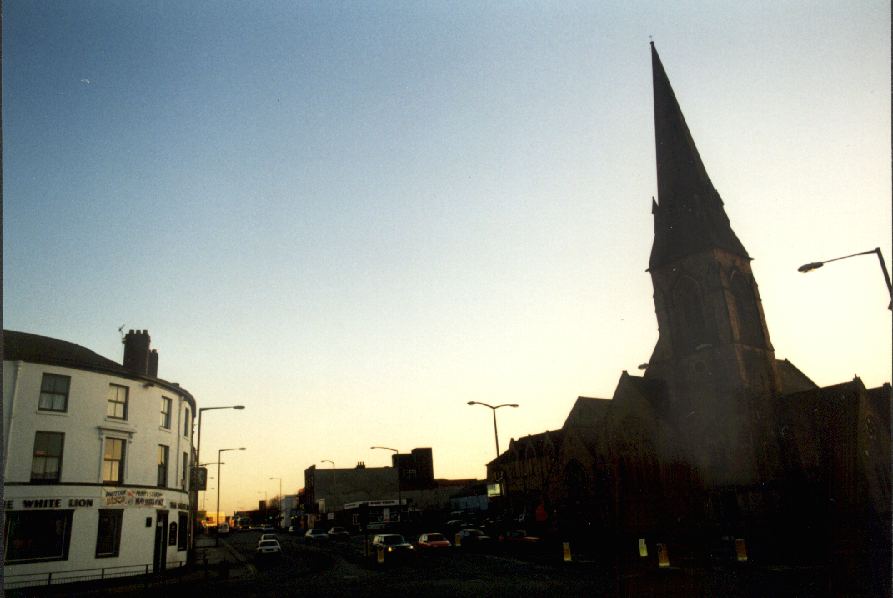
The former White Lion, pictured as a sports goods shop in April 2012 (copyright Google Street View). The area was the shutter is on the far right-hand side was formerly the entry to a courtyard. This was bricked up when the pub expanded into the open area in 1985.

It was a case of ‘another good ‘un gone’ when the White Lion closed its doors for the last time around 2001. It’s now a sports shop.

It was a decent enough pub with pleasant surroundings and back in the day sold well-kept ale – Wilson Mild and Bitter, perhaps even Websters Choice when that came out. It even made the Good Beer Guide on one or two occasions in the eighties and nineties.

So what went wrong? It was probably at the wrong end of town, for one thing. The Albion, Gypsy’s Tent, Greyhound, Hen and Chickens and Blue Boar were all within a few hundred yards and with trade dropping over the years it was inevitable that at least one or two of them would go. And so it proved with the White Lion and its nearest neighbour the Gypsy’s Tent both biting since the turn of the millennium.

The White Lion dated back to the late-nineteenth century so the fact that it lasted over 200 years before closing is doubly tragic. It came into Wilsons ownership in 1949 with their takeover of Walkers and Homfrays, the Salford brewery that had taken over the Manchester Brewery Company in 1912. A number of pubs that ended up owned by Wilsons pubs were earlier owned earlier by local brewery, Wingfields and which was taken over by Manchester Brewery in 1912 although it continued to act as a spirit merchant for some years afterwards.

A refurbishment in 1985 was quite tastefully done considering how some of other Wilsons pubs were knocked about in the early eighties. The vault and games room were extended into the former courtyard and they even retained the table football machine for a while. It was the first time the White Lion had been refurbished since the early sixties.

The nineties, though, were a tougher time as the big brewing combines of the time chose to get out of pub ownership or brewing - even both in some cases.

The White Lion spent a period closed in 1994-95 until it was bought by the Unique Pub Company. When it closed in around 2001 it was put up for sale again and was sold de-licensed to a company dealing in sports goods.

For much of the 20th century the White Lion’s immediate next-door neighbour was the Deansgate railway goods warehouse. From 1828 a railway line ran from Great Moor Street station, which was situated where Morrisons supermarket car park now is, and traversed across the sites of what are now the market and Moor Lane bus station – then a steel works - into the warehouse. The railway line was dismantled in the late-1920s and the warehouse was leased to a firm called Harry Mason & Sons Ltd. They left in 1962 and the warehouse was demolished the following year.

This 1996 shot shows the White Lion on the left-hand side of the image a few years before it closed. The image below shows the pub in the 1980s.


[1] What’s Doing – the Greater  Manchester Beer Drinkers Monthly Magazine. December 1985 issue.


Tuesday, 15 April 2014

King's Arms, Deansgate

Kings Arms Deansgate Bolton


Elizabeth Ashworth, the licensee of the King's Arms, pictured at the turn of the century. A few years after the photo was taken Mrs Ashworth died and the pub was sold to Jackson's Brewery of Spa Road.


The King’s Arms was situated at 86 Deansgate. The pub dated back to the 18th century and the building can still be seen, though at the time of writing (April 2014) it was not in active use.

By the early-nineteenth century the pub was run by the Stewart family with Thomas Stewart as landlord in 1818 and he had been succeeded by Ann Stewart – presumably his wife – in 1824. She was still listed as the licensee in the 1836 directory.

The pub brewed its own beer until the early part of the 20th century.

The noted author and local historian, the late Norman Kenyon, lived at the King’s Arms from his birth in 1917 until 1929. Norman’s father, Frank Kenyon, took over the pub the year before Norman was born and the family remained there until they left to run a fish and chip shop at 42 St Helens Road.

In his book Bolton Memories, Norman blames a drop in trade after the pub’s owners, Jackson’s Brewery of Spa Road – half a mile away from the pub - were taken over by George Shaw & Son Ltd of Leigh in 1927. [1]

“Many customers didn’t take to the new beer, preferring to go to other pubs such as the Blue Boar,” Norman wrote.

Shaw’s weren’t in charge for long and were taken over themselves by Walker Cain Ltd of Warrington in 1931. The King’s Arms became a Walker’s pub until they merged with Joshua Tetley & Sons Ltd of Leeds to form Tetley Walker Ltd. Tetley’s soon decided to close the pub and last orders were finally called in 1962. The pub remained empty for some 12 years before being taken over by a booksellers named Chapter & Verse.

In his book, Pubs Of Bolton 1800 – 2000 [2], Gordon Readyhough stated that it was a religious bookshop. Others recall a more varied selection of books on sale at the shop, which was run by some long-haired gentlemen. However, the layout of the shop was very much as it was in its days as a pub with a short corridor near the entrance with two rooms on either side.

The image at the top of the page is that of Mrs Ashworth, a former landlady who is pictured standing outside the pub some time in the early 1900s. Norman Kenyon wrote an account he was told of the death of Mrs Ashworth, which took place in December 1909, a year after the death of her husband, Henry.

“It was a stark contrast to the frail old lady pictured at the door of Gordon Readyhough’s book Pubs Of Bolton Town Centre. Before he took the licence, Father worked for Mrs Porteous, who ran the Kings Arms from 1911 to 1916. She told him that when Mrs Ashworth died they had to take the sashes out of a bedroom window and lower the coffin to the street because of the awkward stairs and landing.” [1]

The premises were remodelled in the eighties. Chapter & Verse closed in 1980 and the Preston firm of Sweeten’s took over and converted the shop into an open plan. The rickety floorboards were still a feature as they were in Chapter & Verse days. Two of Sweeten’s employees bought the shop in 1997. The shop was Bolton’s final independent bookseller but it closed in 2011 and the building is no longer used.

The shop is pictured here on its final day of trading. 

Proposals to demolish the row of buildings in 2005 and replace them with 24 small shop units came to nothing.

According to the book Haunted Bolton, the building was supposed to be haunted with a number of people alleged to have experienced some sort of paranormal activity. A former landlord sensed the spirit of an elderly lady said to have passed away at the pub in the early-twentieth century (maybe the ghost of Mrs Ashworth). A subsequent psychic investigation sensed the spirit of a middle-aged man on the upper floor. [3]


[1] Bolton Memories by Norman Kenyon, published by Neil Richardson (1993).
[2] Pubs Of Bolton 1800-2000, by Gordon Readyhough, published by Neil Richardson (2000).
[3] Haunted Bolton, by Stuart Hilton and Michelle Cardno. Extract here.  Retrieved 15 April 2014.