Showing posts with label Halliwell. Show all posts

Friday, 28 February 2020

Bowling Green, 97 Eskrick Street, Bolton


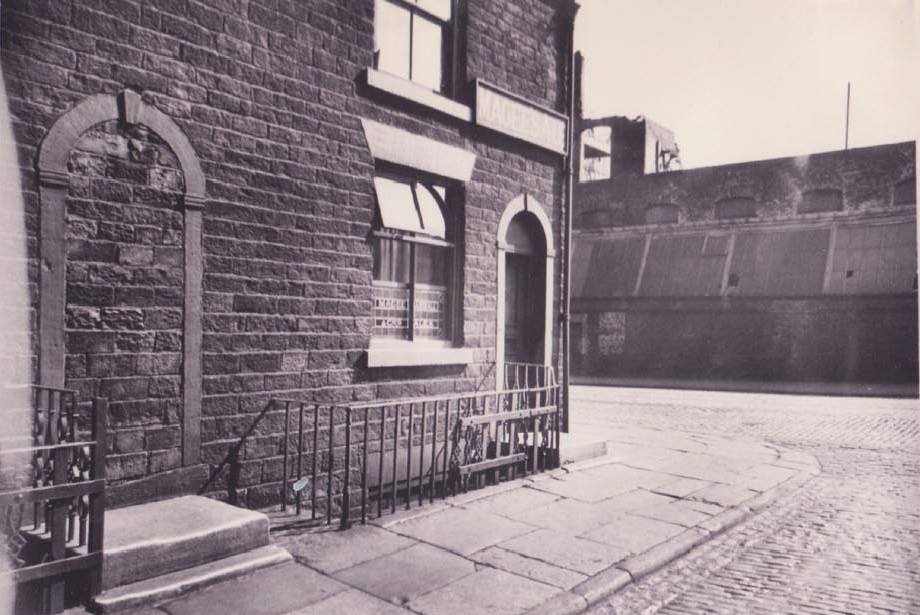
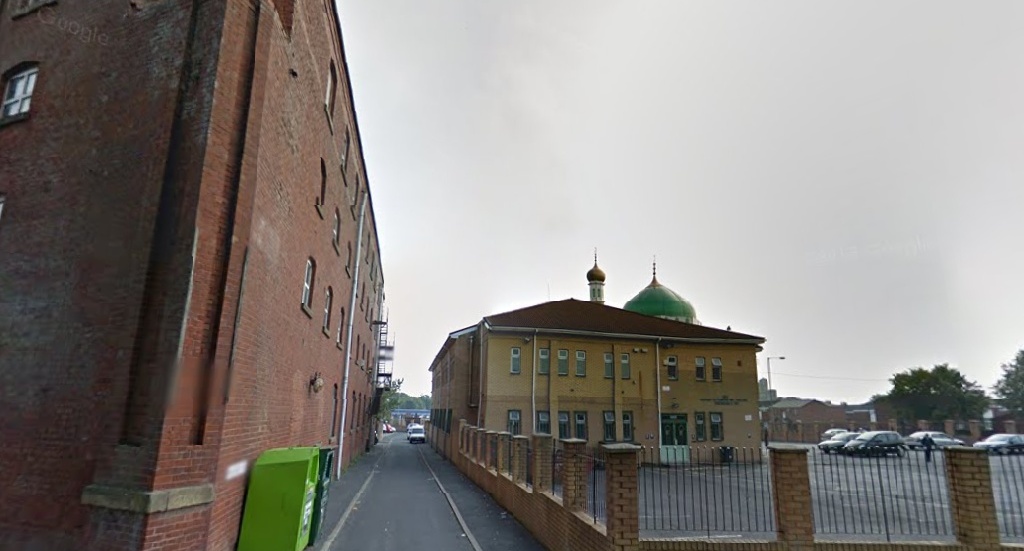
The Bowling Green pictured in September 2009, a couple of years before it closed. Copyright Google.


The Bowling Green was situated on Eskrick Street near the corner of Elgin Street.

The pub was in existence in the 1860s and the first evidence we have is when its bowling green was advertised in the local press. In those days it was part of the Halliwell township rather than Bolton.

A report in the Bolton Evening News of 16 December 1869 stated that the Bowling Green was the venue for a meeting of the Stanley Lodge of the Bolton Operative Conservative Association. The association was one of the first property constituted Conservative organisations in the country dating back to at least 1837. Indeed, the emergence of Operative Conservative Associations – first at Newton-le-Willows in 1832 and then throughout south Lancashire – saw the word 'conservative' adopted by what had traditionally been known as the Tory party. [Peterloo – The Case Re-Opened by Robert Walmsley, 1986].  Operative Conservative Associations tended to recruit factory workers, normally foremen of what may be termed as 'middle management' These were people whom the Tories saw as potential supporters even though the vast majority would not have had the vote. But in times where the lower orders were agitating for social change it kept an element of factory workers on their side. This 1869 meeting at the Bowling Green saw the presentation of a portrait of the late Earl Of Derby by Mr Edward Eskrick to the chairman and vice-chairman of the lodge.

In September 1875, a man was ordered to pay costs and sureties following an assault at the Bowling Green. Andrew Lowe, described as “a respectable looking man” of Halliwell, was accused of assaulting Matthias McDonna, a member of the Halliwell Local Board. McDonna has gone to the Bowling Green to meet a friend. He was only at the pub for a few minutes before Lowe approached him using foul language. McDonna replied: “You are a foul-mouthed man.” Lowe's response involved throwing a volley of punches to McDonna's face and head. In his defence Lowe claimed that McDonna had begun the exchange by calling into question his character on entering the pub. However, the magistrates found him guilty but decided against a custodial sentence. [Bolton Evening News, 2 September 1875].

In 1876 the pub, along with land used as its bowling green, was sold at an auction for £3719. That's the equivalent in 2019 of over £430,000. It was put up for auction again in 1882 but withdrawn before the sale could take place. It was sold again in 1890 when the purchasers were Magee, Marshall and Co. Magee's retained the pub until 1958 when the company was taken over by Greenall Whitley. However, supplies continued to be taken from their brewery at Cricket Street, off Derby Street, until its closure in 1970.

Bev Mortimer posted an image of the Bowling Green on Pinterest [see here]. She claimed that steps to the side of the pub led to a separate bar where you could buy a jug of ale presumably for off sales. This was a common feature in a number of pubs. The Prince Rupert had a similar arrangement and that was even the case at Yates's Wine Lodge on Bradshawgate until the 1980s. 

The pub's bowling green closed in the 1970s. Lock-up garages were initially built but they were replaced by new houses in the 1980s.

The Greater Manchester beer drinkers' monthly magazine What's Doing reported in its September 1987 issues that the Bowling Green was being transferred from Greenall's managed pub portfolio to a tenanted operation along with the Boars Head on Churchgate and the Cotton Tree on Prince Street. All three pubs were believed to be losing money. However, part of the deal with the Bowling Green was a refurbishment involving the installation of a hexagonal bar. The pub reopened in 1988 when this Bolton Evening News feature  reported that the new tenants were Allan and Lynn Fletcher. The Fletchers were to remain at the pub until around 2002 before moving on to the Dunscar Conservative Club. Their daughter Sharon Pendlebury posted on the I Belong To Bolton Facebook group that her dog Bowler used to come downstairs at the end of each evening with his favourite toy for everyone to throw around.

Greenalls got out of brewing in 1991. It then got out of the pub business in 1999 with the sale of its tenanted pubs to Japanese bank Nomura. Its managed pub division was bought by Scottish and Newcastle.

The Bowling Green was eventually sold on again to Punch Taverns. The pub closed in 2011 and was de-licenced in 2012. The building was converted to an Islamic centre and is unrecognisable from its previous existence. Compare the photo below from 2018 with that at the top of the page.

Copyright Google


Saturday, 15 July 2017

Welcome Inn, 14 Victoria Street/16 James Terrace, Bolton


The Welcome Inn pictured around 1965 from the bottom end of Hartley Street. The pub was originally two separate buildings that were eventually linked together by a small entrance built between them.

The Welcome Inn was situated on the corner of Victoria Street and James Terrace, off the bottom end of Blackburn Road.

Although Gordon Readyhough gives the address as 14 Victoria Street in his book Bolton Pubs 1800-2000, the 1905 directory gives the address at 16 James Terrace. 

Moss Street, with its baths that opened in 1924, ran parallel with Victoria Street. Short thoroughfares such as Stirrup Street, Hartley Street, Rutter Street and Aspden Street, along with Back Rutter Street and Back Aspden Street linked Victoria Street and Moss Street. 

St Matthews Mission Rooms were at the other end of James Terrace. Victoria Mill was nearby. In 1891, the mill was owned by Nathan Pickering who lived in nearby Arkwright Street.

Early records of the pub are hard to pin down and the first record we have is from the 1905 Bolton Directory when William Mason is the landlord. However, it is likely that the Welcome Inn was going for some years before that.

The building is shown on maps from 1891 but at that stage it only consists of the property on James Terrace. It appears to have been extended into the adjoining property on Victoria Street by the early part of the 20th century.

By 1924, Andrew Pendlebury was in charge. Next door to the pub on the Victoria Street side was a firm of printers called Pendlebury and Sons Ltd. It seems likely that Andrew Pendlebury was a member of that family.

The pub was originally owned by the John Halliwell's Alexandra Brewery which was situated on Mount Street just a few hundred yards away from the Welcome Inn. Halliwell's went out of business in 1910 and the pubs were taken over by Magees. Like a lot of Bolton pubs, the Welcome Inn kept its Magees signage even after the brewery was taken over by Warrington-based Greenall Whitley in 1958.

The whole area was cleared in the early seventies and the Welcome closed around 1971.

Kentford Road roughly – though not exactly – follows the path of Victoria Street. Similarly, Kingsdown Gardens was built roughly on the site of James Terrace. The Welcome Inn was situated at the junction of those two streets as can be seen below on this view fro September 2014 (copyright Google Street View).


Saturday, 8 October 2016

Derby Hotel (Sharman Arms), 218 Halliwell Road, Bolton

Derby Hotel  Halliwell Road Bolton 1931


The Derby Hotel pictured around 1931. The image comes from a collection of former George Shaw pubs taken shortly after the brewery’s takeover by Walker Cain Ltd of Liverpool.


The Sharman Arms was situated at 218 Halliwell Road. The pub was known for most of its existence as the Derby Hotel. Part of Halliwell Road was known in those days as Derby Street and that gave the pub its original name.

The Derby was a small pub dating back to the 1860s and the first record we have is when Daniel Cain is listed as the licensee in the 1869 Bolton Directory. Daniel Cain was born around 1827, the son of Henry and Mary Cain of Back Oswald Street, Little Bolton. He was a cotton spinner lodging in Hulme Street in 1851 and in 1854 he married Alice Heyes at St John’s church, Little Bolton.

The couple were living on German Street – now Haslam Street off Derby Street – in 1861, but he got into the pub business and was at the Derby by 1869. The 1871 census shows and Daniel and Alice Cain at the Derby along with and two daughters aged 17 and 14. Daniel had retired to Winter Street, Halliwell, by the time of the 1881 census, but his address was given as 35 Wynne Street, Little Bolton when he died on 7 October 1881. The pub trade had been good to Daniel. He left an estate valued at £2293 – the equivalent of around £250,000 today.

Daniel Cain was replaced at the Derby by John Riley who spent over a decade at the pub.

The Derby was bought by Sharman’s whose Mere Hall Brewery was just a few hundred yards away from the pub. Through various brewery takeovers it was owned by Shaw’s of Leigh from 1927, Walker Cain Ltd of Liverpool from 1931 and Tetley Walker from 1961.

In the 1980s this small, basic two-roomed boozer was renamed the Sharman Arms after its former owner. 

It closed around 2011.


A rather forlorn looking Sharman Arms pictured in August 2015 (copyright Google Street View).


Saturday, 3 September 2016

Windsor Castle, 37 Halliwell Road, Bolton


On the right of this image taken in August 2015 is the pharmacy built on the site of the New Inn. The Windsor Castle was opposite the New Inn on the corner of Lune Street. Adisham Drive was built in its place following the redevelopment of the area in the early seventies and can be seen here with the white car waiting to turn out. The Windsor Castle was on the corner nearest the camera. Image copyright  Google Street View.

The Windsor Castle was situated at the bottom of Halliwell Road on the corner of Lune Street. Most pubs on the infamous ‘Halliwell Mile’ pub crawl were situated on the right-hand side of the road as you head out of town. The Windsor Castle was on the left and, along with the New Inn, was one of the first pubs you walked into – or the last if, as tradition appeared to dictate, you started from the Ainsworth Arms at the top of the road.

Writingon the Closed Pubs website, Mary Gray says: “The Windsor Castle was on the end of the first row of shops. At the bottom end at the traffic lights was the District Bank on the corner of Moss street. All gone now of course. I was born in 17 Halliwell Rd and lived there until 1952.”

The Windsor Castle dated back to at least the 1850s although the row of properties that included the pub was standing as early as the 1840s.

James Beddows owned the pub from the late-1850s until his death in 1882. James was originally from Deane.

By 1895 the licensee was William Rogerson. Originally from Dunscar he left for the Cheetham Arms on Blackburn Road where he died in 1913 aged 62.

Joseph Goodlad, formerly of the Junction Inn on Egyptian Street and the Union Arms on Deane Road was another career publican who ran the Windsor Castle. He certainly made a good living out of it. When he died in 1920 he left an estate valued at over £5700 – the equivalent today of almost a quarter of a million pounds. He was succeeded by his son, George, who had previously worked as a joiner.

The Windsor Castle became a Sharman’s pub in the early part of the 20th century. Through various takeovers ownership passed through George Shaw’s of Leigh in 1926, Walker Cain of Liverpool in 1931 and Tetley Walker of Warrington in 1961. The pub received a full licence in 1962.

The end for the Windsor Castle came in the early seventies when it was demolished along with much of the immediate area. Practically the only building to remain following those clearances was Moss Street Baths situated in a street to the rear of the pub. That has since made way for a health centre.

Windsor Castle 37 Halliwell Road Bolton
The Windsor Castle pictured around 1930


Monday, 15 August 2016

City Hotel, 37-39 Eskrick Street, Bolton


The former City Hotel pictured in 2009 (copyright Google Street View). The building was demolished a couple of years later. The front steps still remain.


The City Hotel was situated at 37-39 Eskrick Street in the Brownlow Fold area of Bolton.
A beerhouse named the Eskrick Arms existed at 33-35 Eskrick Street and was certainly in existence at the time of the 1871 Census. By 1881, John Farnworth is at 33-35 Eskrick Street.

So did 33-35 Eskrick Street change its name from the Eskrick Arms to the City Arms? Although streets often renumbered their buildings it is more likely that number 33-35 became the shop at the corner of Darley Street and Eskrick Street. 

Certainly the City Arms as shown on later maps was quite an imposing building – twice the size of those around it. By 1895 it was certainly known as such with an address of 39 Eskrick Street. Robert Bibby (1845-1900) was the landlord and Gordon Readyhough tells us that it was a home-brew pub at the end of the 19th century. [1]

After Robert Bibby’s death in 1900, his widow Maria remained at the pub. She married Ellis Greenhalgh, at 42 some ten years younger than her, in the spring of 1905. The couple were in Wordsworth Street by 1911.

By 1924 Thomas Clowes was the landlord of the City. He was in his mid-fifties and was a shopkeeper/fruiterer in Darley St in 1911 – possibly the building on the site of the old Eskrick Arms. The shop premises had previously been run by his father-in-law and were  next door to the City. The greengrocers closed when Thomas Clowes left and was turned into a fish-and-chip shop.

Magees took over the City and it subsequently became a Greenalls pub following their takeover of Magees in 1958.

The original City Hotel was pulled down along with much of the surrounding area in 1968. However, Greenall’s were given planning permission to rebuild the pub. The new City Hotel opened later that year. It closed in 2008. There were plans for the premises to be converted into an Indian restaurant; however, those plans fell through and the building was demolished in 2011.

[1] Bolton Pubs, 1800-2000, by Gordon Readyhough. Published by Neil Richardson (2000).

Saturday, 13 August 2016

Sefton Arms, 22 Brougham Street, Bolton


The Sefton Arms dated back to the 1860s. The first record we have is when John Lewis is listed as licensee on the Bolton Directory of 1869. The pub was situated on Brougham Street, a short side street that linked Pen Street with Lune Street off Halliwell Road. It was a typical street-corner local standing on the corner of the junction with Thwaites Street.

In October 1869, landlord John Lewis was caught selling booze beyond his permitted opening time of 11pm. It was only 11.15 and Lewis claimed that his clock showed the time as being nine minutes past, but the magistrates took the evidence of the policeman concerned, Constable Woods, and fined the unfortunate Mr Lewis 10 shillings (50p) plus costs.  That's the equivalent of around £60 today. [1]

By the start of the twentieth century The Sefton was owned by Halliwell’s brewery situated just a few hundred yards away Mount Street. Halliwell’s were bought out by Magees in 1910 and the Sefton became a Greenall’s pub after they took over Magees in 1958.

The Sefton closed in 1971 as part of the clearances in the Halliwell area. Brougham Street, Pen Street, Thwaites Street were all demolished and Halliwell Health Centre now stands on the site.

[1] Bolton Evening News, 2 November 1869.


Sunday, 3 January 2016

Black Dog, 82 Halliwell Road, Bolton


The former Black Dog pub pictured in August 2015 (copyright Google Street View)

The Black Dog was situated at 82 Halliwell Road, a stone building that still stands today.

Ellis Howarth lived at the house in 1851 along with his wife Ellen, four children and a lodger. Howarth had only recently left the Bulls Head in Farnworth and he was at the Crown and Cushion in the mid-1840s. He decided to turn his house into licensed premises so he spent two guineas on the necessary licence to open a beerhouse and the Black Dog was in business. The Howarths remained at the pub until Ellis died in 1873.

James Patterson was at the Black Dog for over a decade from the early part of the 1890s. James was a cotton spinner living in Darbishire Street in 1891 and had moved to the pub by 1894. He was later at the Stanley Arms on Egyptian Street.

By the 1920s the landlord was Ernest Rycroft whose parents had run the Cotton Tree on Lever Street.

The pub was later sold to Magee’s and it became a Greenall’s pub when they took over Magee’s in 1958.

The Black Dog closed in 1984. Any reminiscences of the pub from the sixties to the eighties always point out that it was very popular with darts players.

The building is now used by the nearby Noor al Islam mosque.

A photo of the side of the Black Dog taken in the 1950s. Note Moorlands Mill on other side of the road.


An image taken from the same position - Prospect Street - in August 2015 (copyright Google Street View). 


Thursday, 3 December 2015

Lord Ashley, 29 Tyndall Street, Bolton


The Lord Ashley was one of a myriad of pubs in Halliwell that sprang up as the area became industrialised but was then demolished as the old houses that were built as a result of that industrialisation were knocked down in the post-war era. 

It was named after Lord Anthony Ashley, whose Ten Hour Act of 1833 ensured no child over the age of nine years of age worked for more than nine hours. Less famously, he was also responsible for an overhaul of the Lunacy Laws a few years earlier.

The first mention of the Lord Ashley was in 1882 when licensee John Kay saw his application for a licence blocked at the annual Brewster Sessions due to previous convictions. [1] But the pub stayed open and it was run by the Holt family for over 20 years.

John Holt was at the pub in 1891 along with his wife Rachel and their two children. But by 1901 John was living two doors away at 25 Tyndall Street and working as a carter. He was succeeded by Baxter Holt, who may or may not have been a relative. Baxter had run a pub before in the Egerton area, the Church Inn at 120-122 Blackburn Road, but he was also a stockbroker and it was in this latter profession, rather than pub landlord, that he described himself when his son William married in 1897. [2]

Baxter Holt died in 1903 and the Lord Ashley was taken over by his wife Ellen. She remained at the pub until she died in May 1920 at the age of 76.

The Lord Ashley had been bought by Halliwell’s brewery on Mount Street around the turn of the 20th century. It became a Magee’s house when Halliwell’s was taken over in 1910 and remained so until it closed.

In Bolton Pubs 1800-2000, Gordon Readyhough tells us that the Lord Ashley shut in the 1950s and shows on maps from around 1953-54. However, I am thankful to Tom Blears, a former resident of Tyndall Street who has commented below to suggest the pub was open until at least 1962. It was demolished around 1963 or 1964. Tom's aunt Irene Sharples worked at the pub along with her husband and in his comment Tom recounts the tragic story of the Neary family whose son was killed in a nearby lodge.

The rest of Tyndall Street was demolished at the same time and Kirkhope Drive built in its place. An August 2015 view of Kirkhope Drive is below (copyright Google Street View).


[1] Manchester Courier, 24 August 1882.

[2] Thanks to Rob Hildyard for identifying Baxter Holt's pub in Egerton.


Saturday, 28 November 2015

Alexandra Hotel, 14 Stewart Street, Bolton


The Alexandra was situated on the corner of Mount Street and Stewart Street quite close to what is now Brownlow Way.

The first record of the pub comes in 1868 when John Halliwell is listed as a beerseller at 14 Mount Street. However, an application to the local magistrates for a spirit licence in 1878 claimed that the pub was built 13 years earlier in 1865 . [1]

In his book Bolton Pubs 1800-2000, Gordon Readyhough tells us that Halliwell began his brewing business in 1856. Prior to that he had lived in Sharples where he worked as a bleacher. It is possible that he opened the pub that became Alexandra at the same time he began the brewing business as that part of Halliwell was in the process of being built up around that time. The name Alexandra comes from Princess Alexandra of Denmark who married Queen Victoria’s eldest son, the Prince of Wales in 1863. That also gives us a possible date for the pub. She became Queen Alexandra when her husband King Edward VII acceded to the throne on Victoria’s death in 1901.

By 1871, the address of the Alexandra pub is given at 14 Stewart Street. John Halliwell is there. He is 39-years-old and his occupation is given as a brewer. His wife Martha is 41 and there are six children including Edward, 16, who worked for his father as a brewer, and John, aged 10. By this stage Halliwell had built a brewery next to the pub.

The business expanded and by 1876 John had left the pub and was living at 77 Chorley Old Road. Edward Buckley had taken over as licensee of the Alexandra and in 1881 he applied again for a spirit licence. Up to then the pub had sold only beer. The application was refused along with similar applications for the Rock House Hotel and for Mere Hall, then owned by Richard Haworth. Mr Haworth said in his particular application that he had purchased Mere Hall ten years previously and had laid out the grounds surrounding the mansion. He had also built 317 houses in the vicinity. No matter, one of the occupants of those 317 homes complained, as did a Mr Bradbury who got up a petition to object to the granting of the licence. Like the Alexandra and the Rock,  the Mere Hall didn’t get its spirit licence.

John Halliwell’s wife, Martha (nee Whittaker) died in 1879. The couple had married at St Paul’s in Astley Bridge in 1853. John remarried the following year this time to Jane Fielding, a provision dealer from Blackburn Road. However, he died in 1885 and the business was taken over by his eldest son, Edward.

It was under Edward Halliwell that the business grew. In 1881 he was living at 85 Hampden Street, just a few yards away from the brewery. But his influence within the business was already such that he was described on the census form for that year as a master brewer employing 11 men. He was 26 at the time and living with his 22-year-old wife Ann and their one-year-old daughter Florence. But in 1890 Edward made the decision to sell the brewery, its 12 pubs – including the Alexandra – and nine off-licences. [2]

By 1891 the family were living in much more salubrious surroundings at 108 Chorley New Road, a large semi-detached house which still stands opposite Bolton School. Edward Halliwell took a back seat in the running of the brewery and by 1901 he was living on Westcliffe Road, Birkdale, near Southport along with his wife and daughter. The family had been hit by tragedy with the death of Edward’s brother, John Halliwell, in 1891. John had worked for the brewery as a salesman and could claim some credit for the business’s growth. He was just 30 years old when he died.

Edward also died at a relatively young age. He was 49 when he died while on a visit to Merionethshire in Wales. He left an estate valued an estate valued at £16584 – the equivalent of £1.8million today – split between his wife, his daughter and his brother, James Halliwell, who had eschewed a life in the brewing industry to become a vet.

Back at the Alexandra, George Hamilton took over in 1885. A former joiner from nearby Brougham Street he was at the pub for well over 25 years. George was at the Alexandra when it changed ownership. In December 1910, another local brewer, Magee, Marshall and Co, made an offer to buy Halliwell's brewery and its small tied estate of pubs, including the Alexandra. After the deal went through the brewery closed and it was demolished in the 1920s. For many years its site was a wasteland colloquially known to local children as ‘the brewery’.

The Alexandra carried on into the 1930s. It gained a full licence in the early part of 1935 when the wine and spirits licence of the Four Factories on Turton Street was transferred. It lasted until the 1960s when it closed and was demolished as part of the clearance of that part of the Halliwell area.

Stewart Street can be seen in the distance on the other side of this car park off Back Grantham Close. But the building in the foreground is actually the site of the Alexandra Hotel.

[1] Bolton Evening News, 28 August 1878,
[2] Bolton Evening News, 3 December 1890.

For the record the other pubs were:
FourFactories, 34 Kay Street;
MasonsArms, 125-127 Turton Street;
Blue Bell Inn on Kay Street,
Royal Oak, 115-117 Kay Street;
HaydockArms, 28-30 Haydock Street;
JunctionInn on the corner of Egyptian Street and St John Street; 
Victoria British Queen, 124-126 Blackburn Road,
LordAshley on Tyndall Street, which was sold along with five adjoining houses which the brewery also owned;
SeftonArms on the corner of Thwaites Street and Brougham Street;
NewbrookHouse Inn, 52-54 Junction Road,
Church Inn, Manchester Road, Little Hulton.

The off-licences were situated at:
515-517 Halliwell Road,
138 Halliwell Road,
1-3 John Brown Street,
1-5 Hill Lane, off Windley Street,
10-12 Back Turton Street,
41-43 George Street, Astley Bridge,
36-38 Balshaw Street,
58-60 Morris Green Lane.


Alexandra Hotel Stewart Street Bolton site of 2012

Stewart Street can be seen in the distance on the other side of this car park off Back Grantham Close. But the building in the foreground is actually the site of the Alexandra Hotel.

Edited 12 November 2018 to  include details of the pub's inclusion in the sale of Halliwell's brewery in 1890.

Saturday, 1 August 2015

Belle Vue, 242 Halliwell Road


The Belle Vue pictured in October 2009 less than two years before it closed (copyright Google Street View).

Part of the famous ‘Halliwell Mile’ the Belle Vue Hotel was situated at 242 Halliwell Road. If you started the crawl at the top of Halliwell Road it was one of the last pubs - or one of the first if you started at the bottom.

The first mention we have of the pub was on the 1871 Directory. At that time it was being run by 44-year-old Mathias Stones who lived at the premises along with his Hannah and their six children. The family had lived on Gaskell Street in 1861 where Mathias worked as a buttonmaker.

Mathias Stones died in 1886 and his widow Hannah Stones took over the running of the Belle Vue. She was aided by her son Matthew who brewed the pub’s beer. By 1901 Hannah had retired and was living with her daughter Emma Brownlow who was a brewer and beerseller at the Lord Raglan further up Halliwell Road. Hannah died in 1904.

David Rostron was running the Belle Vue by 1905. He had previously been at the Lodge Bank Tavern on Bridgeman Street. By 1911 the pub was in the hands of the Oliver family. William Oliver (1876-1913) ran the pub until death and his widow Mary Jane Oliver succeeded him as licensee.

By the 1930s the pub later became part of the small tied estate owned by Samuel Smith – not the Yorkshire firm but a Bolton brewer who also ran the Dog and Snipe on Folds Road along with a small tied estate of pubs in Bolton and Horwich.

The Belle Vue later became a John Smith’s pub. John Smith’s Smooth is sold in many Bolton pubs today but before that the brewery’s Magnet Ales – as they were known – were a rarity in the town. Perhaps as well as they didn’t have a great reputation.

John Smith’s got out of the pub-owning business in the 1990s and the Belle Vue ended up in the hands of Enterprise Inns. It closed in the early part of 2011 the final licensee being Zoe Eckersley.  It was delicensed on 14 July that year. The premises are now [2015] a bedroom showroom. 

Belle Vue Halliwell Road Bolton


The former Belle Vue pictured in September 2014 (copyright Google Street View).

Friday, 26 June 2015

Kings Arms, 177 Chorley Old Road


Kings Arms Chorley Old Road Bolton


The Kings Arms pictured in the early-1930s. The shot was taken by Walkers as part of a pictorial review of their tied estate in the Bolton area. The old St Luke’s church is pictured to the right of the pub. Its foundation stone was linked by local dignitary Peter Ainsworth of Smithills Hall in 1869. The church opened by licence in 1871 and was consecrated in 1874. It was destroyed by fire in the early-1970s and was replaced by a single-story building. St Luke’s Street runs to the left of the pub. Note the separate entrance to the vault on the corner of the pub. That had long since been bricked over when this writer first drank there in the late-seventies.

The Kings Arms on Chorley Old Road dated back to the late-1870s. A small pub, its layout was similar to that of the Dog and Partridge on Manor Street: a small vault to the left of the main entrance, a pool room towards the rear and a large lounge running along the whole of the right-hand side of the pub.

The first recorded landlord was John Balshaw (1855-1894) who was already living at the pub in 1881 along with his wife Sarah. The couple married in 1876. Sarah’s family hailed from the Daubhill area and the 1871 Census has her living with her family on Swan Lane.

Oddly, the 1891 census has John and Sarah living around the corner in St Luke’s Street.
After John died in 1894, Sarah took over the pub. She met Walter Brown and the couple married in 1896, but they remained at the Kings Arms until at least 1911. However, the pub had earned the nickname of 'Balshaw's' by which it was known locally for many years after.

The Kings was owned by Robert Wood of the Prince Arthur brewery, but it was sold to Tong’s of Deane after wartime raw material restrictions forced Wood’s to cease brewing in 1917. Tong’s in turn sold out to Walker Cain Ltd of Liverpool in 1923 and the pub fell into the hands of Tetley after they bought Walker’s in 1960. Admiral Taverns were the owners when the Kings closed in the summer of 2010. The premises were converted  into offices and are now occupied by a legal firm.


The Kings Arms pictured around 1973. 


The Kings Arms pictured in 2014. (copyright Google Street View).

Saturday, 6 June 2015

Albert, 30-32 Progress Street


Back Progress Street pictured in 2012 (copyright Google Street View). The former Prospect Mill No 3 is on the left and the Masjid –E-Noor-Ul-Islam mosque on the right where Progress Street once stood. The rear of the Albert pub backed onto this thoroughfare about half-way down the street on the right-hand side.  

The Albert was situated at 30-32 Progress Street, off Prospect Street.

The first record we have of the pub is William Casstles running a beerhouse in 1870 until his death in 1873. That area at the bottom of Halliwell Road was just being developed at the time. Prospect Mills opened in 1867. On the other side of Halliwell Road, Waterloo Mill was already in existence. Progress Street was a row of some 50 or so cottages built in the 1860s.

Halfway down Progress Street there was a break in the terrace with Linen Street connecting Progress Street with Back Progress Street. On the corner of Progress Street and Linen Street was the Albert.

Sometimes, having a pub on a residential street was a smart move. However, the fact that the Albert closed soon after the turn of the 20th century suggests that wasn’t always the case. Over on the other side of Blackburn Road, Buxton Street supported two pubs, but Progress Street struggled to support one. It was a tough market and perhaps people gravitated towards the bright lights of Halliwell Road. Never mind the ‘Halliwell Mile’. The New Inn, the Windsor Castle, the Ship Royal George and the Black Dog weren’t much more than 100 yards away and all were competing for the same custom as the Albert.

In 1901, the pub’s owners, Magee, Marshall & Co, applied to have the beerhouse licence converted into an off-licence. The pub’s final licensee was Simeon Rigby (1840-1912) who left the Albert to go and live on Gibbon Street just off Derby Street where he worked as a coachman. The former pub premises were occupied by William Fallows in 1924.

Progress Street was demolished in the 1970s. The Masjid –E-Noor-Ul-Islam mosque stands on its site. Oddly, Back Progress Street still exists.


Wednesday, 27 May 2015

Arkwrights Ale House - Gardeners Arms (Monkeys Nest), Valletts Lane


Shorn of its pub signage, but still a classic example of late-nineteenth century pub architecture, Arkwrights Ale House in late 2014. The pub was awaiting sale as a residential property.

Article updated 18 January 2022 with photos of the pub from 1964 (see below).

In olden days, a pub given the sign of the name of an occupation would denote that it was often used as a meeting place for workers in that trade. But the increased number of licensed premises when beerhouse licences became freely available after 1830 led to new entrants into the trade and many of those named their pubs after a former profession or after the trade of members of their family.

In 1871, Ralph Southern was a gardener living at number 2 Valletts Buildings, just off Valletts Lane. Ralph was 61 and a widow and he lived with his two sons, William (25), who was also a gardener, and 21-year-old Alfred who was working as a butcher and who, before long, had opened up a meat stall in the Market Hall in town.

Next door to the Southerns, at number 4 Valletts Buildings, was a beerhouse run by one of their relatives, Moses Halliwell, and his family. This enterprise was short-lived, but later in the 1870s, Alfred opened a beerhouse of his own at number 10 Cope Bank, just a bit further up Valletts Lane, and he named it the Gardeners Arms in honour of his father and his brother. Sadly, this venture didn’t work out. In June 1883, Alfred Southern petitioned for bankruptcy at the Bolton County Court with debts estimated at £1300 – a huge sum in those days.

The Gardeners Arms was bought by local brewers Joseph Sharman’s. But as the nineteenth century wore on, the area around Valletts Lane and Cope Bank became more populous and the decision was made to rebuild the pub a little further down from Cope Bank on Valletts Lane  itself, next to a bowling green that the brewery already owned. The new Gardeners Arms opened in 1895.

Sharman’s were taken over by Shaw’s of Leigh in 1927 and like the rest of Shaw’s estate the pub was bought by Walker Cain Ltd in 1931.

The Manchester Archives hold this image of the Gardeners during the Sharman’s era. It has been dated to around 1920 when the landlord would have been Percy Stafford.

The Bolton News published a piece about the pub towards the end of 2014 and they received this response from a Mr Hardman:

"Valletts Lane used to run from Church Road to Ivy Road and off the lane was Horrocks Street and Benson Street. On the other side was a council land fill site.

"The pub was called the Gardeners' Arms and the landlord was a former international football called Donaldson.

"He turned the bowling green into a football pitch for the young of the area, which put the old men's backs up," he says. [1]

This would have been in the 1950s. Alex Donaldson was born in 1890 in Barrhead, East Renfrewshire. An outside forward, he was signed by Bolton Wanderers in 1912 from Scottish minor side Ripley Athletic. He spent nine years at Burnden Park in a career that was interrupted by World War I before leaving for Sunderland in 1921. He subsequently had spells at Manchester City, Chorley and Ashton National and made six international appearances for Scotland, most of those caps earned during his time at Bolton. [2]

After his playing career ended, Mr Donaldson opened a sports shop in Gorton, Manchester, but he eventually went into the licensed trade and ran the Gardeners Arms during the late-forties and early-fifties. He was running the pub in 1951 when his 20-year-old daughter June married a local motor mechanic, Frederick Parkinson and the couple lived at the pub after they wed. Alex Donaldson died in Bolton in 1972.

The layout of the Gardeners was of a classic pub design. The lounge-best rooms were on the left of the entrance while the vault – and its curved bar - was to the right of the entrance.

The pub was nicknamed ‘The Monkey’s Nest’ though the origin of this name isn’t known.

The Gardeners became a Tetley pub when they took over Walkers in 1960. The bowling green was eventually converted into a car park and after another licensee fell into bankruptcy, the Gardeners was sold into the free trade in the mid-1980s. It became Arkwrights Ale House in an attempt to give a typical down-to-earth feel to a traditional pub.

But despite being based in a built-up area, Arkwright’s struggled particularly during its final years. Licensees came and went – there were 11 changes of supervisor between 2005 and 2013. The pub closed in June 2014 and was sold for residential use later that year. Trust Inns, the Chorley company that were its final owners, were looking for just £165,000 for what was a sizeable property.

The property’s Rightmove entry for its 2014 may still be seen here

The pub was sold and was later demolished to be replaced by housing.

[1] Bolton News, 21 January 2015. Accessed 27 May 2015. 
[2] Wikipedia entry for Alex Donaldson. Accessed, 27 May 2015.

Thanks to reader Tony Kelly for these photos of the Gardeners Arms taken in 1964.